From IOR to In-House Operations: Building Licensed Japan Infrastructure for a Global Medical Device and Cosmetics Company
Case Study Snapshot
- Client: Global OEM in the medical device and cosmetics sector
- Challenge: Transition from COVUE’s IOR model to licensed in-house Japan operations
- COVUE’s Role: Licensing strategy, hiring support, application documentation, QMS development, and cross-border compliance communication
- Key Result: Application and documentation completed in 9 months, ahead of the typical 14 to 16 month market average
- Long-Term Outcomes: The client now operates under its own Japan licenses and continues to use COVUE for local compliance consulting
Success in Japan creates new responsibilities. For regulated product companies, the model that supports early market growth is not always the model that can support long-term control, licensing, and operational maturity.
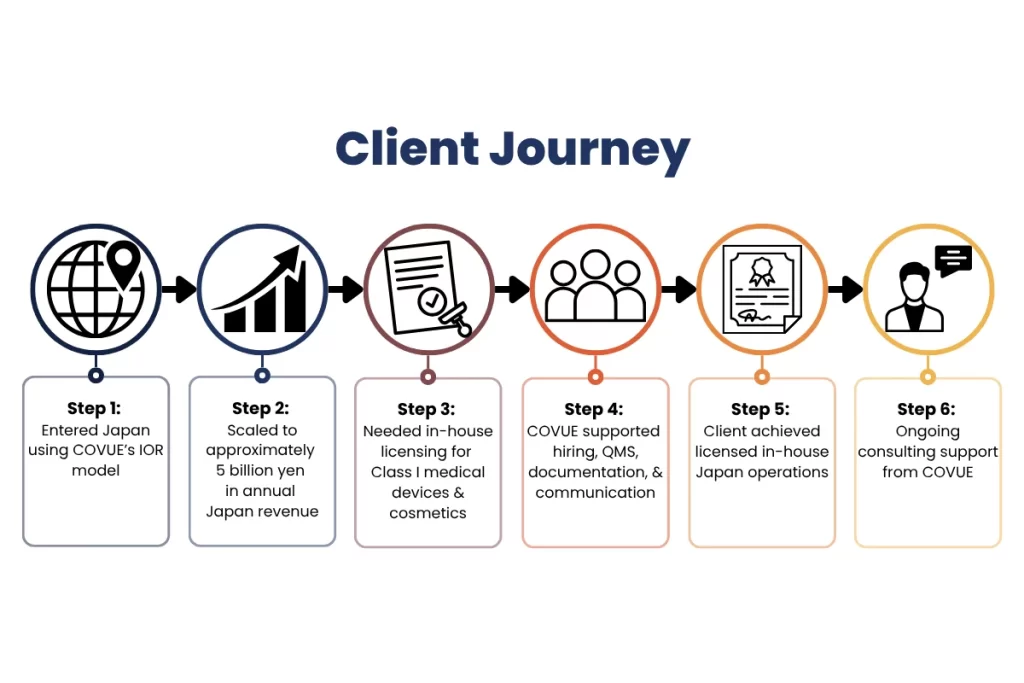
That was the turning point for a global OEM in the medical device and cosmetics sector. The client had entered Japan through COVUE’s Importer of Record model, giving the company a compliant path to market while relying on COVUE’s local import and regulatory infrastructure. As the business grew to approximately 5 billion yen in annual Japan revenue, the client decided it was time to establish its own local operation.
The next phase required more than a change in import structure. To operate independently, the client needed the internal capability to hold manufacturing and Marketing Authorization Holder licenses for Class I medical devices and cosmetics. COVUE supported that transition, helping the client move from IOR-supported growth to a self-sustaining regulated operation in Japan. The project required licensing strategy, compliance department design, licensed hiring, application documentation, QMS development and implementation, and ongoing coordination between the client’s overseas headquarters and Japan office.
The Challenge: Licensing Was Not Just an Application, It Was an Operating Model
The client’s goal was clear: move beyond the IOR model and establish its own licensed presence in Japan. The practical reality was far more complex.
For regulated products, approval in Japan is closely tied to how the business is actually built. The client needed to satisfy multiple requirements across medical devices and cosmetics, including obtaining manufacturing and Marketing Authorization Holder licenses. These approvals depended on specific operating conditions inside the Japanese subsidiary.
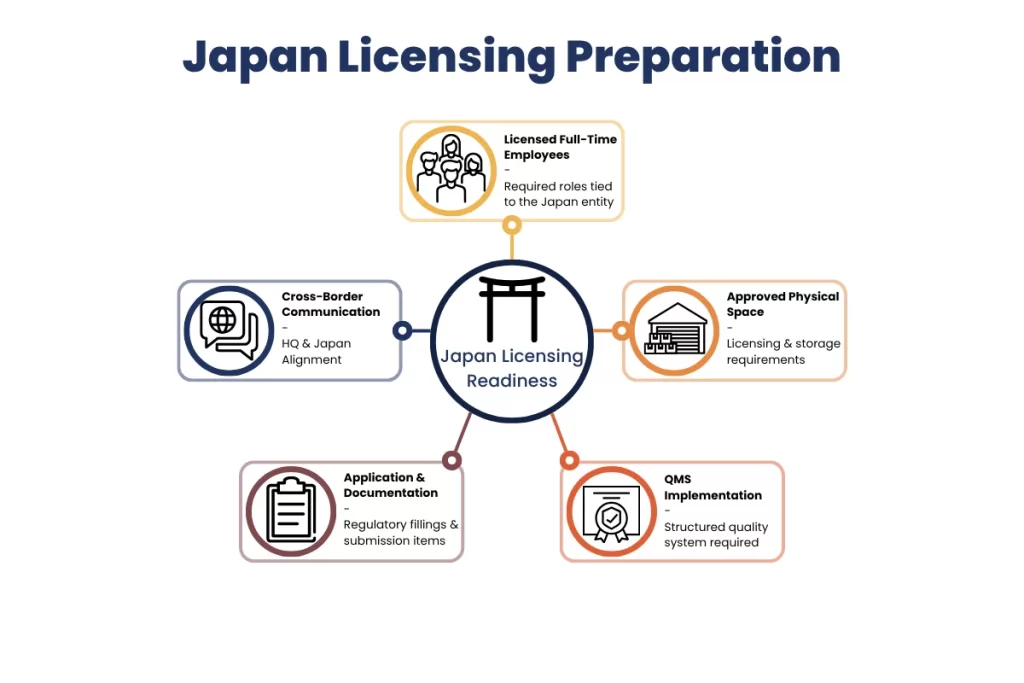
Before the application process could proceed, the client needed three qualified, full-time employees directly employed by its Japanese entity. Stability in those roles was critical because personnel changes could delay or reset parts of the application process. The client also needed approved physical space connected to storage and regulatory requirements, along with a fully implemented Quality Management System.
Although COVUE briefed the client on these requirements early, implementation proved difficult. Qualified bilingual compliance personnel were hard to secure in Japan’s labor market, especially at the salary levels the client initially expected. Communication between the Japan team and the overseas compliance team also became a challenge, even when the local team had bilingual ability. Business-level regulatory communication required more than general translation. It required compliance fluency across both languages and operating cultures. Leadership turnover within the Japanese business unit added further instability. Without consistent local leadership, the client struggled to maintain momentum, support morale, and coordinate the licensing work with headquarters.
The Goal: Move From IOR-Supported Growth to Self-Sustaining Japan Operations
The client needed to transition from COVUE’s IOR model to a self-sustaining Japan operation capable of holding the required medical device and cosmetics licenses, managing import and Marketing Authorization Holder responsibilities, and maintaining compliance without disrupting an already successful business.
The goal was not only to receive licenses. It was to build the operating structure behind them.That meant putting the right people, space, systems, documentation, and communication processes in place so the client could manage regulated operations in Japan with greater internal control.
The Strategy: Building the People, Systems, and Documentation Behind Licensing
COVUE initially served as an advisor, helping the client understand the requirements and plan the transition. As the project advanced, the client encountered challenges with hiring, internal coordination, documentation, and implementation. COVUE then took a more direct role and was white-labeled to handle key parts of the transition.
COVUE helped design the client’s compliance function by clarifying the department structure, defining implementation priorities, and identifying the personnel requirements tied to the medical device and cosmetics licenses. This gave the client a practical roadmap for what had to exist inside the Japanese subsidiary before licensing could move forward. A major part of the work involved hiring the licensed full-time employees required for the application. In Japan, regulated product licenses depend on more than the company’s intent to comply. They require qualified in-house personnel who hold the right credentials and can support the legal responsibilities attached to the license. COVUE helped the client navigate this requirement in a competitive labor market where bilingual regulatory talent was difficult to secure.
COVUE also managed the application and license documentation, preparing the materials needed to support the client’s transition from IOR-supported operations to its own regulated business model. In parallel, COVUE developed and implemented the client’s Quality Management System, giving the company the process foundation to meet regulatory expectations after approval.Throughout the project, COVUE served as a communication bridge between the client’s overseas headquarters and Japanese subsidiary. This was essential because regulatory implementation demanded both local Japanese compliance knowledge and the ability to communicate requirements clearly to global stakeholders. COVUE helped reduce misunderstanding, align expectations, and keep the project moving despite language, culture, and organizational barriers.
The Results: A Licensed Japan Operation Built for Long-Term Compliance
COVUE completed the application and documentation work in 9 months, ahead of the typical 14 to 16 month market average for this type of licensing process.
The final license receipt took 18 months because readiness depended on client-side decisions outside the application itself, including securing the appropriate licensed staff and approved physical space. That distinction mattered. COVUE accelerated the parts of the process it was responsible for, while the project also revealed how staffing, facilities, and internal decision-making can affect licensing timelines in Japan.
Despite those delays, the client achieved its core objective. The company received the required licenses and moved from IOR-supported market participation to its own regulated operating model in Japan.
The result was not only a completed licensing project. The client gained the internal structure needed to support ongoing medical device and cosmetics compliance, manage import responsibilities, and operate with greater control in a market where compliance depends on both documentation and day-to-day execution. COVUE’s role continued after the licenses were received. Even with its own Japan office and internal licensed team, the client continues to rely on COVUE for consulting support as a local compliance expert, including guidance on import compliance, labels, and related Japan requirements.
Why COVUE
This case reflects a common challenge for regulated product companies in Japan. As the business grows, the question often shifts from “How do we enter the market?” to “How do we build the structure to operate here responsibly over time?”
COVUE supported the client through that shift by connecting licensing strategy with the operational details that make licensing possible: qualified people, appropriate space, documented systems, local regulatory interpretation, and clear communication between Japan and headquarters. For companies entering Japan, scaling in Japan, or preparing to move from IOR support to their own licensed operations, the lesson is clear: compliance is strongest when it is designed into the business structure, not handled as an isolated task after the fact.
Ready to Build Your Japan Compliance Infrastructure?
If your company is preparing to launch regulated products in Japan, transition from IOR to in-house operations, or strengthen your compliance and licensing structure, COVUE can help you build the foundation required to operate with confidence.
Talk to COVUE about building a Japan-ready compliance operation for your next stage of growth.