How COVUE Helped a Premium Food Brand Validate Demand in Japan
Case Study Snapshot
- Client: Premium Spanish olive oil brand exploring demand in Japan.
- Challenge: No clear proof of Japanese consumer demand after FOODEX buyer traction failed to convert.
- COVUE’s Role: Built and managed a controlled D2C validation test through Amazon Japan and Rakuten Ichiba.
- Key Result: Full-price Amazon sales overtook discounted trial purchases within three months of launch.
- Long-Term Outcomes: The brand gained demand proof, consumer feedback, repeat-purchase signals, and a clearer path for Japan growth.
A premium Spanish olive oil brand, shaped by generations of agricultural heritage, visited Japan to explore whether their product could find demand beyond its established European network. The brand had a strong story and a carefully crafted, premium product, but limited visibility into how Japanese consumers would respond in a category already shaped by established competitors in the market.
FOODEX Japan 2024 became the brand’s first real signal check in the market. After presenting at the event without securing Japanese buyers, the brand began to question whether Japan had real commercial potential. COVUE saw a different possibility. The lack of distributor traction did not necessarily prove weak consumer demand. It showed that the brand needed a more direct way to test whether Japanese consumers would recognize, understand, and buy the product. COVUE proposed a controlled D2C test through Amazon Japan to put the product directly in front of consumers and gather measurable demand signals.
The Challenge
The brand was not facing one clear barrier. It was facing a set of unknowns that made Japan difficult to evaluate.
- No direct proof of Japanese consumer demand
After presenting at FOODEX Japan 2024, the brand secured two Korean distributors and began building traction in Korea, but left without any Japanese buyers. The contrast made them question whether Japan held real potential for their products. Entering Japan without proof would have meant committing inventory, budget, and internal focus before the brand knew whether consumers would respond. For a premium olive oil product, that uncertainty mattered. The category required more than market availability. It required education, positioning, and a channel strategy that could explain value before asking consumers to pay for it. - Strong competition and familiar consumer expectations
The Japanese olive oil market already had established competitors, many of them sold at lower price points and packaged in the standard green bottles consumers were used to seeing. Without careful positioning, the product risked being judged against lower-priced alternatives before consumers understood what made it different. - Limited understanding of Japan entry models
The brand had no experience importing into Japan and limited knowledge of the available paths to market. They needed a way to test demand without overcommitting to a full market entry model before they had evidence that the product could sell.
The Goal
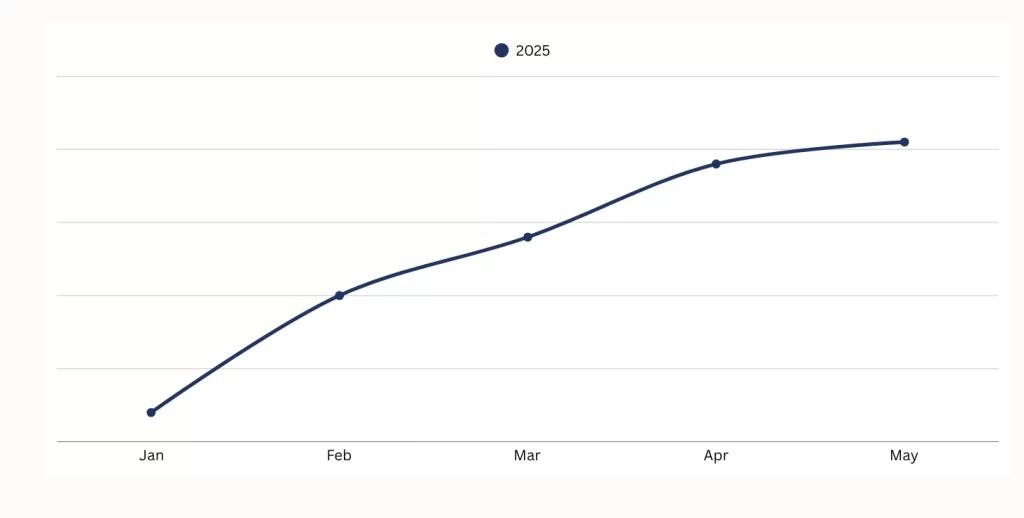
COVUE’s goal was to help the brand make its next Japan decision based on evidence, not assumptions. After/ conducting internal market validation, we saw potential for the brand’s olive oil product in Japan. One supporting signal behind this approach was the upward trend in olive oil search interest across Amazon Japan and Google Japan over the past five years.
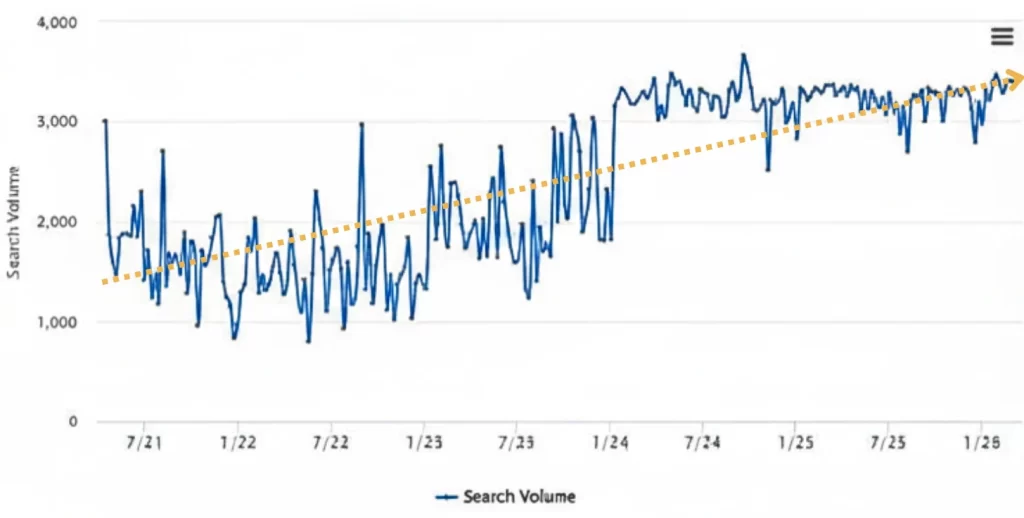
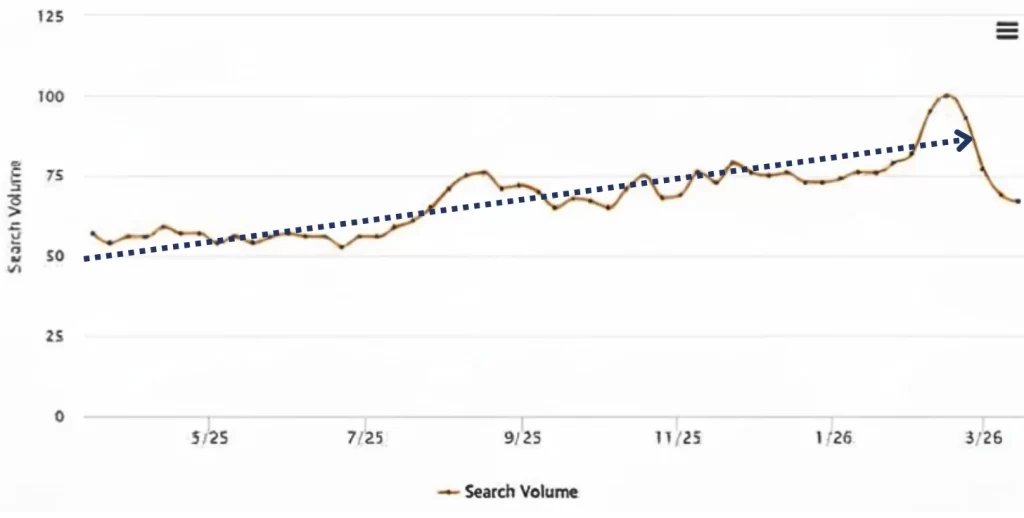
This indicated growing consumer curiosity at the category level. However, category interest alone could not confirm whether this specific product would resonate, which is why controlled market validation was required. Rather than relying on this early validation alone, our priority was to test whether Japanese consumers could recognize, understand, and respond to the product’s value through real market activity.
The key objectives were:
- Establish the first signs of consumer interest, purchase activity, and brand visibility in Japan.
- Collect real consumer voices, product experience feedback, and market-specific learnings to better understand how the product was perceived.
- Track demand signals such as traffic, subscriptions, order numbers, and initial revenue to understand whether the product had the potential to grow.
The Strategy
COVUE designed a controlled D2C validation campaign to test consumer response before the brand committed to a larger Japan launch.
1. Started with eCommerce as the test environment
COVUE launched the product through Amazon Japan and Rakuten Ichiba, giving the brand a direct, measurable path to Japanese consumers.
2. Activated an affiliate-based trial campaign
To encourage first-time purchase, COVUE launched an affiliate campaign offering the product at a 50% discount. The campaign was intentionally limited to fewer than 1,000 bottles, with the final test quantity set at a level aligned with the brand’s risk tolerance. This gave the brand a controlled way to introduce the product, reduce the barrier to trial, and collect early demand signals without overcommitting inventory.
3. Collected consumer insight through two surveys
COVUE ran two survey phases targeting 100 respondents: one before purchase to understand initial interest, and one after purchase to capture product experience. The first helped identify what made consumers curious about the product. The second captured how customers experienced the olive oil after trying it, giving the brand direct feedback that could inform future messaging, positioning, and sales strategy.
4. Preserved the product’s premium identity
Rather than redesigning the product for Japan, COVUE preserved the original brand presentation and added only the required Japanese compliance label. The strategy was to protect the product’s authenticity while using Amazon Japan and Rakuten Ichiba listings to educate consumers on quality, origin, and value.
The activation launched in January 2025, peaked in February, and concluded in April.
The Results
The campaign showed that the product could attract, convert, and retain a viable niche audience in Japan.
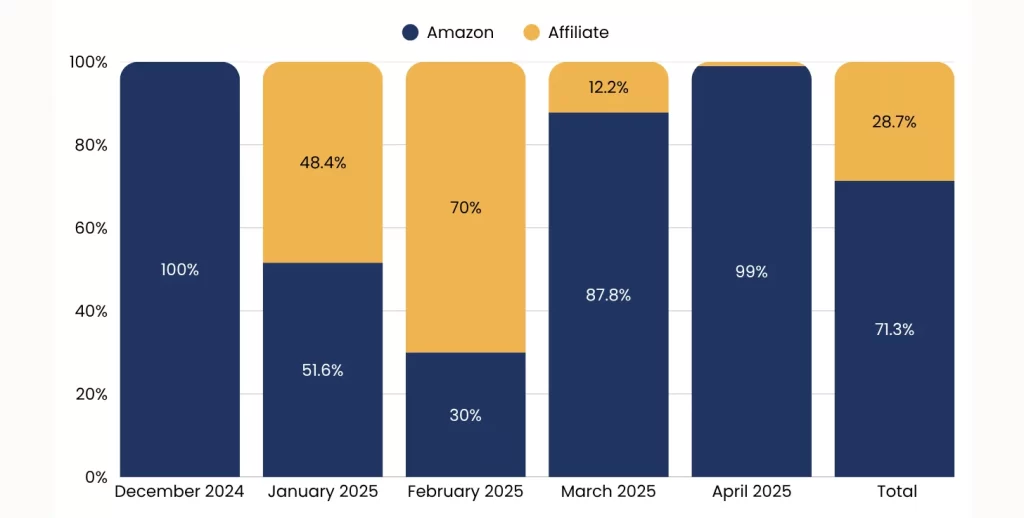
1. Full-price demand began to overtake discounted trial purchases
This marked the transition from promotional traction to organic demand. The initial inventory sold through within six months. More importantly, around three months after launch, full-price Amazon sales began overtaking discounted trial purchases. This indicated that the campaign was not only generating short-term trial, but helping create demand beyond the promotion.
2. Strong consumer feedback validated the product’s premium positioning
Survey results showed clear quality acceptance, with 96% of respondents confirming that the product quality met expectations. The average flavor rating reached 4.7 out of 5, supported by positive feedback on taste, aroma, freshness, and richness. This suggested that consumers were not evaluating the product on price alone. They were recognizing the quality experience behind the premium positioning. The average recommendation score also reached 8.6 out of 10.
3. Repeat purchase signals began to appear
As full-price sales increased, subscriptions also began to grow steadily, with subscription activity reaching around 10% of monthly Amazon orders by the later stage of the campaign. While category-specific benchmarks for new-to-market premium food brands are limited, this was still a positive early repeat-purchase indicator. Customers were not only trying the olive oil once. Some were seeing enough value to make it part of their routine.
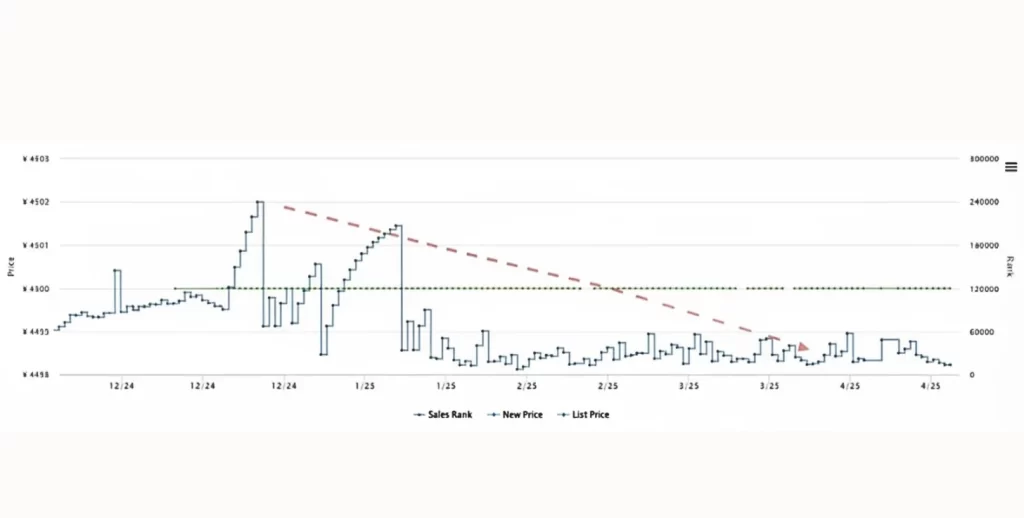
4. Amazon sales rank improved after launch
The product’s Amazon sales rank showed a clear downward trend after the January 2025 activation began. As the product’s sales rank improved, it moved closer to the top of its Amazon category. This provided another signal that marketplace performance was strengthening after launch.
Together, these results gave the brand a clearer basis for their next decision in Japan. Instead of relying on buyer silence from one exhibition, the brand now had direct consumer demand signals, marketplace performance data, repeat-purchase indicators, and product feedback from Japanese customers. The outcome showed that the product could gain traction in Japan, and that early eCommerce activity could be used to test, learn, and build confidence before deeper market investment.
Why COVUE?
COVUE does not treat Japan as a launch-and-hope market. Instead of pushing aggressive expansion, we build structured validation models that replace assumptions with measurable proof.
For brands entering Japan, early uncertainty is normal. The real risk is making major decisions based on incomplete signals, such as limited data from trade shows, buyer conversations, or platform results. COVUE helps brands avoid that trap by designing practical, low-risk market tests that connect strategy, compliance, eCommerce setup, localization, and consumer insight into one clear path forward.
This approach gives brands more than market access. It gives them a structured way to understand Japan before making larger investments. By combining local market knowledge with hands-on execution, COVUE helps international brands identify whether demand exists, how consumers respond, and what needs to be refined before scaling.
Ready to Test Demand in Japan?
If you are unsure whether Japan represents a real demand opportunity for your product, speak with COVUE to explore how a structured validation model can help your brand test demand, reduce early risk, and build a stronger foundation for Japan.